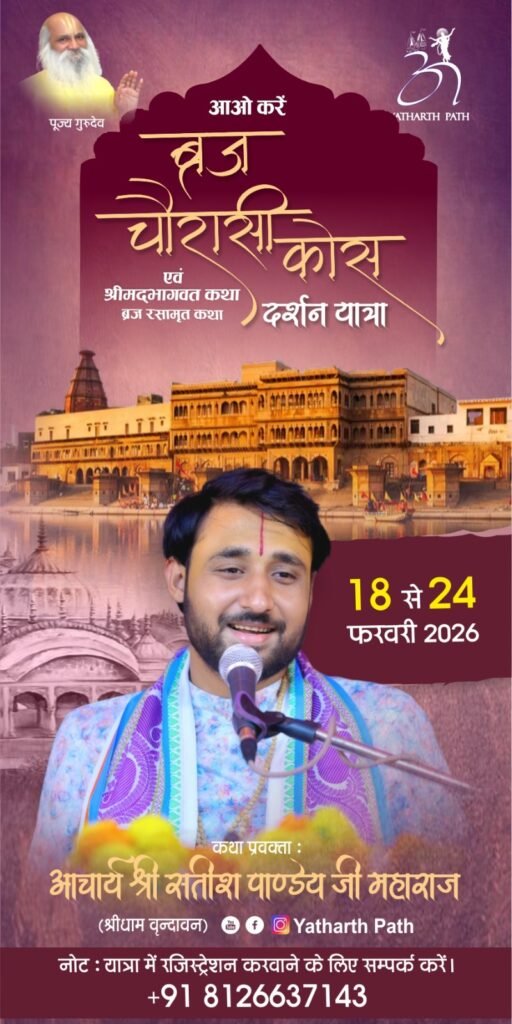
Braj Chaurasi Kos Darshan Yatra

Layer 114@2x
Braj Chaurasi Kos Yatra

Braj Chaurasi Kos Yatra (84 Kos Parikrama)

The Braj Chaurasi Kos Yatra is a sacred pilgrimage covering approximately 252–300 kilometers (84 kos) around Braj Bhoomi, the divine land of Lord Shri Krishna. This holy circumambulation includes darshan of major spiritual sites in and around Mathura, Vrindavan, Govardhan, Barsana, Nandgaon, Gokul, and along the Yamuna River.
The primary purpose of this yatra is liberation from sins, attainment of Krishna bhakti, and spiritual purification.
This is not merely a physical journey, but a deeply spiritual experience that connects devotees with the divine presence of Lord Krishna. It brings peace to the mind and washes away accumulated sins.
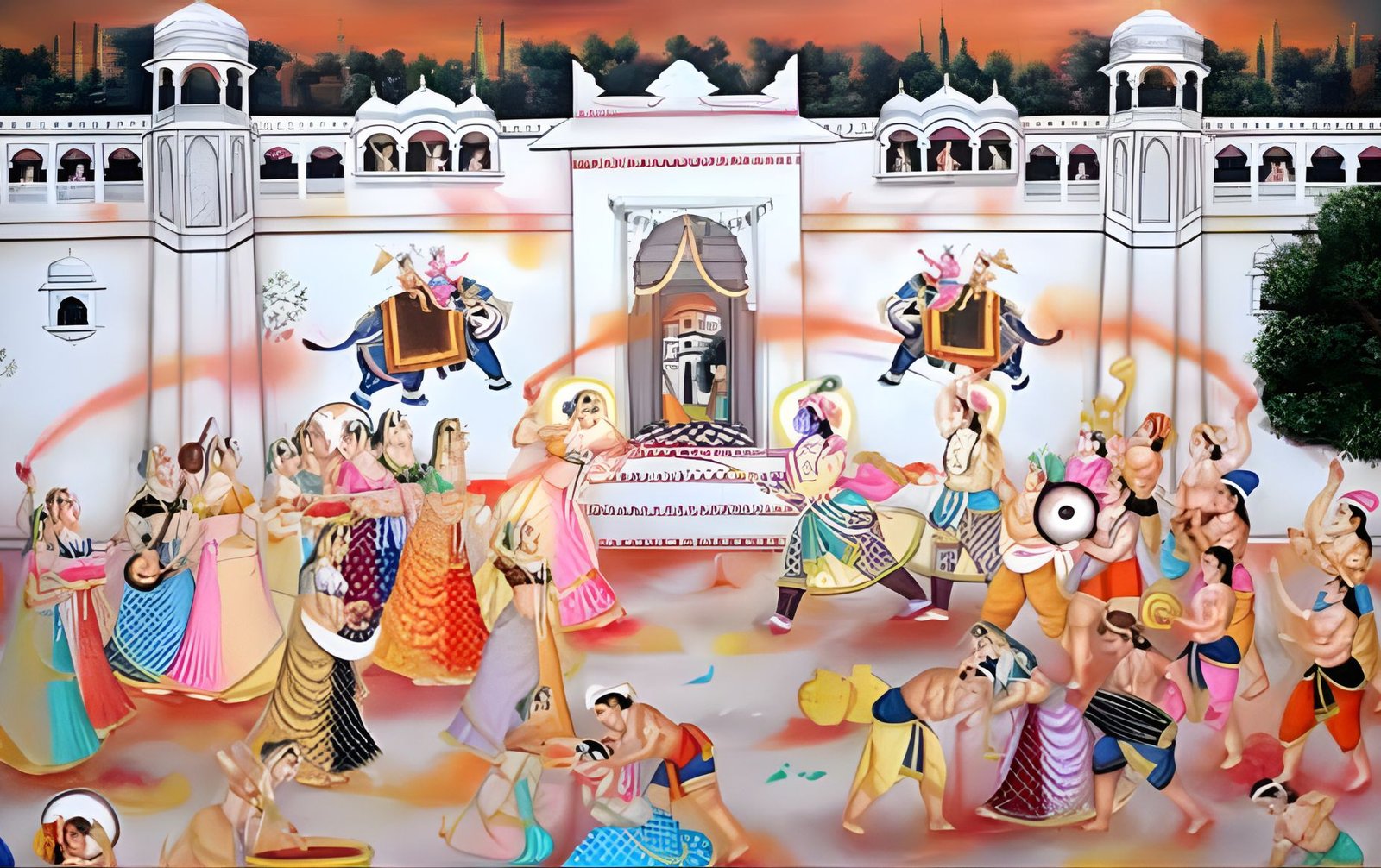
During the yatra, devotees visit sacred places where Lord Krishna performed His divine pastimes (leelas), such as Radha Kund, Mansi Ganga, Nidhivan, Gopeshwar Mahadev, along with numerous forests, ponds (kunds), and temples.
It is believed that Lord Krishna sanctified this land by spreading divine sand across 84 kos, making Braj Bhoomi extremely holy. Completing this parikrama grants immense spiritual merit (punya).

Major Places Covered

Mathura

Shri Krishna Janmabhoomi, Dwarkadhish Temple

Vrindavan

Nidhivan, Ranganath Temple, Yamuna Ghats

Govardhan

Govardhan Parvat, Radha Kund, Kusum Sarovar

Barsana

Birthplace of Radha Rani, Maan Garh

Nandgaon

Village of Nand Baba

Gokul

Putana Vadh Sthal, Akrur Ghat, Baldev Ji Temple
Layer 114@2x
Do’s and Don’ts During the Yatra

Do’s

Wear modest clothing while visiting temples (shoulders and knees covered).
Walk barefoot if possible; otherwise, wear simple footwear.
Keep your belongings safe.
Maintain cleanliness and respect the sanctity of holy places.
Offer respect (pranam) to saints and Brajwasis.
Do’s and Don’ts During the Yatra

Don’ts

Do not litter anywhere during the pilgrimage.
Do not disrespect or harm any person, animal, or living being.
Layer 114@2x
Braj Chaurasi Kos Yatra

Spiritual Benefits of Braj Chaurasi Kos Yatra

Liberation from 84 lakh yonis: Freedom from the cycle of birth and death.
Destruction of sins: Cleanses past karmas and removes negativity.
Attainment of Moksha: Leads toward spiritual liberation.
All pilgrimages combined: Scriptures say all holy places reside in Braj during Chaturmas; hence this yatra equals visiting all tirthas.
Experience Krishna’s Divine Pastimes: Deep emotional and devotional connection with Lord Krishna.
Inner purification: Strengthens devotion, surrender, and spiritual discipline.
Fulfillment of wishes: Devotees believe their heartfelt desires are fulfilled, diseases are cured, and balance returns to life.

Mythological Significance

According to legends, Lord Brahma performed this parikrama as an act of repentance after testing Krishna and was shown the path to liberation.
It is also believed that on the wish of Mother Yashoda and Nand Baba, Lord Krishna invited all sacred pilgrimages to reside in Braj, further elevating the importance of this yatra.

Conclusion

The Braj Chaurasi Kos Yatra is a divine journey of devotion, surrender, and transformation. By walking the sacred land of Krishna’s leelas, devotees attain peace, purity, and spiritual elevation, ultimately breaking the bonds of birth and death and moving closer to moksha.
Shri Braj Chaurasi Kos Yatra Description

Shri Yamuna Puja Sankalp for Chaurasi Kos Yatra

Chunari Manorath, Gopeshwar Mahadev, Katyayani, Shri Banke Bihari Ji, Shri Radhavallabh Ji – Vrindavan

Day 1

Bhatarod Bihari, Akrur, Birla Mandir, Dwarkadhish, Vishram Ghat, Janmabhoomi, Madhuvan Maholi, Dhruv Teela, Dhruv Kund, Lavdasur Cave, Shantun Kund, Shantun Bihari.

Day 2

Govardhan – Manasi Ganga, Chandra Sarovar, Surdas Ji Bhajan Sthal, Paitha Village Parikrama, Chakleshwar Mahadev, Hardeo Ji, Daan Ghati, Govind Kund, Apsara Kund, Puchhri Ka Lautha Jatipura, Mukharvind, Shyam Kund, Radha Kund, Krishna Kund, Shrinath Ji, Indrasan, Kusum Sarovar.

Day 3

Braj, Dauji Kund, Dauji Darshan, Deeg Mahal, Lakshman Mandir, Hanuman Ji Darshan, Govind Lala Kund, Narsimha Kund, Adi Badri, Gangotri, Yamunotri, Alaknanda, Lakshman Jhula, Ram Jhula, Haridwar, Mansa Devi, Gauri Kund, Kedarnath, Badrinath, Charan Pahadi, Gaya Kund, Vrinda Devi Mandir, Govind Jagannath Ji, Bhojan Thali, Shankar Ji Mandir, Kameshwar Mahadev.

Day 4

Barsana – Kadam Khandi, Uncha Gaon, Lalita Sakhi Ghar, Deh Kund, Radharani, Ghevar Van, Mor Kuti, Sudama Mandir, Jaipur Mandir, Pili Pokhar, Prem Sarovar, Sanket Van, Nandgaon, Nandeshwar Mahadev, Kokilavan, Kosi Seksai, Peedanath.

Day 5

Shergarh, Aincha Dauji, Bihar Van, Akshay Vat, Cheer Ghat, Katyayani Devi, Shergarh Marg, Nauh Jheel, Vanshivat, Bhandirvan, Belvan, Mansarovar, Radharani.

Day 6

Rawal, Nandi Anandi, Dauji, Chintaharan Mahadev, Brahmand Ghat, Gokul, Chaurasi Khamba, Raman Reti, Raskhan Samadhi.

Day 7

Havan, Completion of Yatra, Yamuna Puja, Vrindavan Parikrama.

Donation & Worship Materials During the Yatra

Yamuna Puja – Saree cloth, Suhag Pitari, Silver coin

Gau Puja – Suhag Pitari, Saree, Anklet, Toe rings, etc.

Charan Pahadi – Silver feet of Thakur Ji

Bhojan Thali – Five utensils

Vanshivat – Silver flute

Deh Kund – Gold donation

Cheer Ghat – Yellow cloth

You may also voluntarily donate at other places as deemed appropriate.

To register for the Yatra, please get in touch with us.